In-home, threshold, and curbside are three last mile delivery levels that differ by how far the crew brings your item. Curbside delivery drops the item at the curb or driveway, leaving the customer to move it inside. Threshold delivery brings it just inside the first doorway, garage, or entryway. In-home delivery carries it to the customer’s room of choice — often upstairs — and at the white glove tier adds unpacking, assembly or installation, and removal of packaging and the old item. Curbside is fastest and cheapest; in-home costs the most but protects the product and the customer experience, which matters most for heavy, bulky goods like furniture, appliances, and fitness equipment.
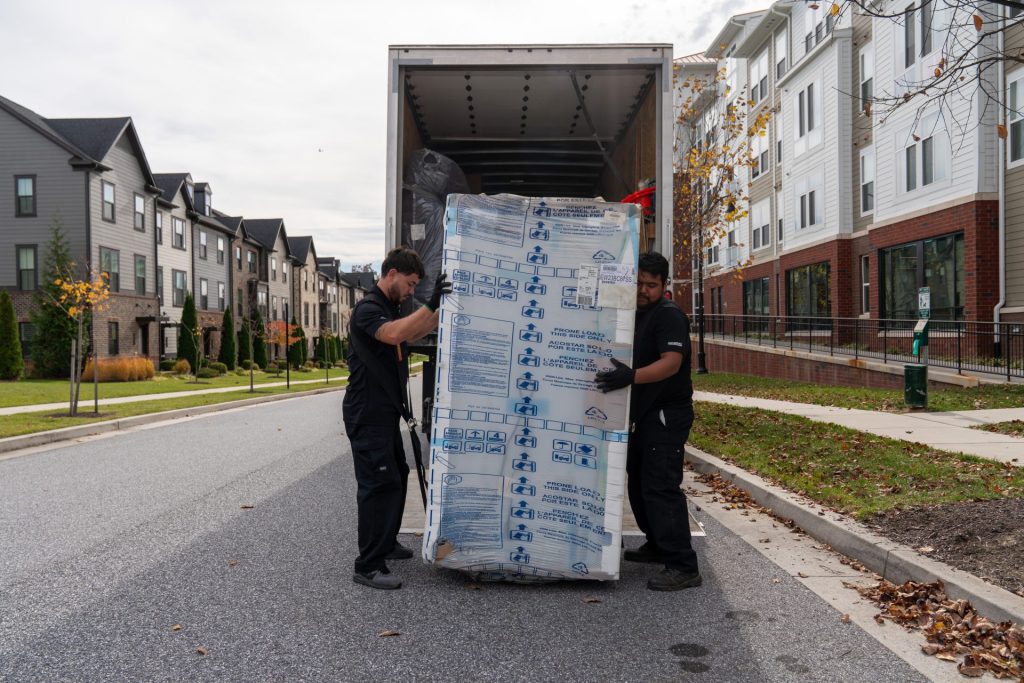
A customer orders a 220-lb sectional sofa. Three weeks later, a truck pulls up. What happens next depends entirely on the type of shipping that was used for this product: curbside, threshold, or in-home.
Most customers may never know the difference until delivery day, and by then, it’s too late to manage expectations. When checking out and ordering a product, a customer might expect that a product arrives with in-home delivery capabilities, but that might not always be the case, leading to unexpected surprises on the day of the delivery. Big and bulky products are often expensive and can be hard-to-replace,
Quick answer: Curbside delivery drops the item at the property line and leaves the customer to bring it inside. Threshold delivery brings it just past the front door, garage, or first dry entry point. In-home (white-glove) delivery places the item in the exact room the customer wants, fully unpacked and often assembled. The tier you choose changes your cost per shipment, your damage rate, and how your brand is remembered.
Here’s what each one involves, and how to pick the right one for what you sell.
Curbside Delivery: The Driveway Drop-Off
Curbside delivery is exactly what it sounds like: the carrier gets the item to the curb, driveway, or edge of the property, and the job ends there. Getting it from the driveway into the house is ultimately the customer’s responsibility.
It typically includes delivery to the property line, the item left on its pallet or in original packaging, and a signature or delivery confirmation. It does not include carrying the item indoors, unpacking, assembly, or debris removal.
Curbside makes sense for smaller big and bulky items, cost-sensitive shipping strategies, or customers who’ve already lined up their own help, whether it’s movers, family, or a contractor. It’s one of the most affordable tiers available, but that low cost comes from shifting real physical labor, and real risk, onto the person least equipped to manage it. A customer without a dolly, a spare set of hands, or the physical ability to lift 150 pounds may find their delivery experience soiled no matter how well the product itself performs.
Threshold Delivery: Past the Door, Not Past the Hallway
Threshold delivery sits in the middle. The carrier brings the item past the curb and into the home’s first accessible, weather-protected entry point: the front door, the garage, or the first room just inside the entrance.
It typically includes delivery into that first dry entry point, with the item usually still in its packaging, protected from the elements once inside. It generally does not include delivery to a specific room like a bedroom or basement, unpacking or assembly, or navigating stairs.
Threshold is a strong middle-ground option for retailers who want to reduce the physical burden on customers without paying full white-glove rates. The catch is that “delivered inside” and “delivered to my bedroom” sound the same to a customer until they aren’t. That gap in expectations is one of the most common sources of “Where is my order” (WISMO) calls and post-delivery complaints in big and bulky retail — which makes clear checkout language just as important as the delivery itself.
In-Home Delivery: The White-Glove Standard
In-home delivery, usually marketed as white-glove delivery, is the top tier. The carrier brings the item to the exact room the customer chooses, unpacks it, and — depending on the product — assembles it and hauls away the packaging when they’re done.
It typically includes delivery to the room of the customer’s choice, unpacking and placement, assembly or installation for items like furniture or cabinetry, debris and packaging removal, and often a two-person crew for anything heavy or unwieldy.
This tier costs more per shipment, but it earns that cost back in ways that don’t always show up on the delivery invoice: fewer damage claims from improper customer handling, fewer refused or disputed deliveries, and a materially better final impression of the brand. For high-value or assembly-required products — mattresses, furniture, cabinetry — the delivery is often the last physical interaction a customer has with your company. It’s remembered longer than almost anything else in the buying journey.
Why the Distinction Actually Matters
This isn’t just delivery terminology: it’s a set of tradeoffs that show up in your numbers.
Damage rates climb when untrained hands are the last ones to touch a heavy, awkward item, which is exactly what happens at the curbside tier. Refusal and return rates climb when a customer’s mental picture of “delivered” doesn’t match what happens on their driveway. Support ticket volume climbs whenever the gap between threshold and in-home service isn’t spelled out clearly at checkout. And brand perception, for anything expensive enough to need a two-person delivery crew, is shaped as much by that final delivery moment as by the product itself.
Most big and bulky retailers don’t pick just one tier — they run curbside as a budget option, in-home as a premium tier, and threshold as the middle ground for specific categories. The right mix isn’t about finding the “best” tier; it’s about matching service level to product weight, product value, and how much of the delivery experience you actually want to control.
Frequently Asked Questions
What is the difference between curbside and threshold delivery?
Curbside delivery ends at the driveway or property line, and the customer brings the item inside themselves. Threshold delivery goes one step further, bringing the item just past the front door or into the garage, but not to a specific room.
Is white-glove delivery the same as in-home delivery?
Yes. “White-glove delivery” and “in-home delivery” are generally used interchangeably to describe delivery to a specific room, including unpacking, assembly, and debris removal.
Does threshold delivery include carrying items up stairs?
Not always. Stair carries vary by carrier and are frequently excluded or offered only as a paid add-on. Retailers should confirm this directly with their delivery partner rather than assume it’s included.
Which delivery tier has the lowest damage rate?
In-home/white-glove delivery typically has the lowest damage rate, since trained delivery teams — not customers — handle the item through its final placement.
How do I decide which delivery tier to offer for my products?
Weigh product weight and value against customer expectations: lightweight, lower-cost items are often fine at curbside, while heavy, high-value, or assembly-required items (furniture, mattresses, cabinetry) generally justify in-home or white-glove service.
About CDS Logistics: Experts in Big and Bulky Last Mile Delivery
CDS Logistics is one of the largest providers of last mile delivery and fulfillment solutions in the United States. CDS’s headquarters is in Baltimore, Maryland, with 182 hubs nationwide. Over the past three decades, CDS has built expertise to make the company an industry leader specializing in big and bulky products. CDS’s proprietary, in-house technology and hands-on operational expertise provide results that are consistent, reliable, and proven to drive outstanding customer experiences.
Click the buttons below to learn more about the industries we serve, as well as the services we provide.
- How White-Glove Delivery Reduces Damage Claims on Heavy Fitness Equipment
- How Route Optimization Software Actually Cuts Delivery Costs
- In-Home Delivery vs. Threshold Delivery vs. Curbside: What’s the Difference?
- Jobsite Coordination: Why Builder Schedules Should Drive Your Delivery Windows
- How Window and Door Manufacturers Can Cut Damage Claims in Half

