Windows and doors are usually custom-made to order, so damage or delay during delivery doesn’t just mean a late shipment — it means a re-manufacture that can take weeks to months. Unlike furniture or appliances, there’s rarely replacement stock available. This makes windows and doors delivery riskier and more schedule-critical, often affecting contractors and job-site timelines, not just the buyer. Reducing risk requires specialized glass-and-frame handling crews, pre-delivery coordination with site contacts, and treating delivery as a construction milestone rather than a standard appointment.
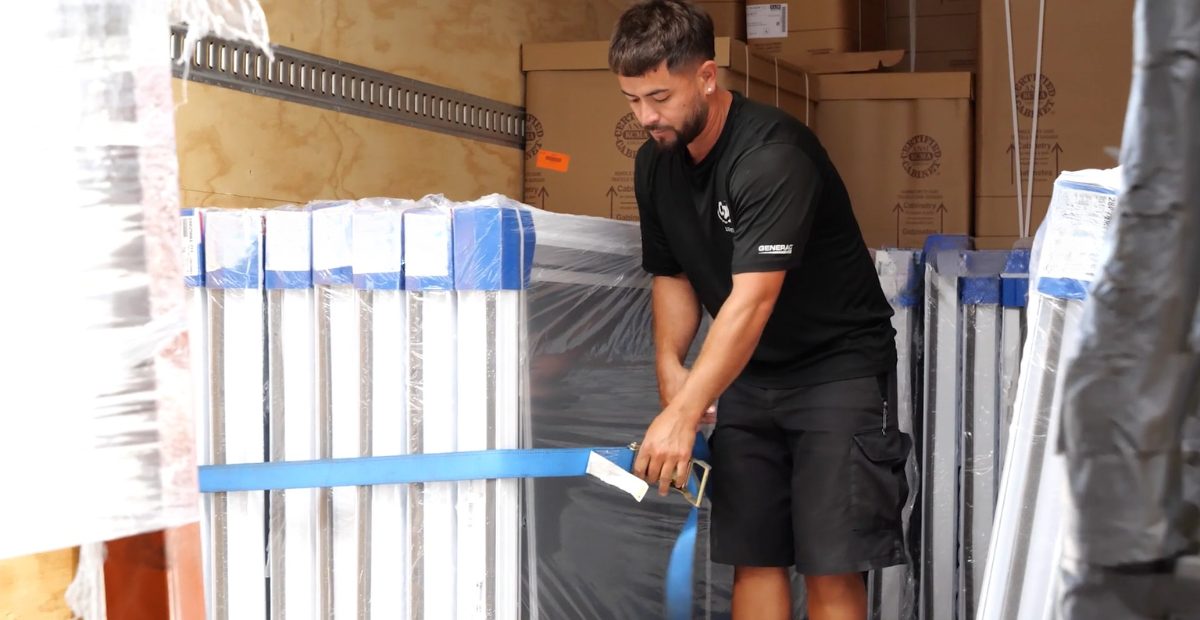
Most conversations about big and bulky delivery focus on damage rates, two-person crews, and appointment windows. Those problems are real for windows and doors too, but they’re not the main problem sales and operations teams are focusing on. The real problem is this: a damaged or delayed window usually can’t just be redelivered. It has to be rebuilt.
Unlike furniture, appliances, or mattresses, most windows and doors sold through retailers, distributors, and manufacturers are made-to-order. There’s rarely a replacement sitting in a warehouse. When something goes wrong in the last mile, you’re not looking at a redelivery in a few days; you’re looking at a re-manufacture that can take weeks, sitting on top of a construction or renovation schedule that was already counting on that window being installed on time.
That single fact changes the entire risk of windows and doors delivery, and it’s something that needs to be discussed more often with last mile delivery for millwork.
The quick answer
- The core problem: Windows and doors are typically custom-made to order, so damage or delay doesn’t just mean a late delivery. It means a re-manufacture that can take 4-12 weeks, often stalling an entire installation or construction schedule.
- Why it’s worse than other big & bulky categories: Furniture, appliances, and mattresses usually have replacement stock. Windows and doors usually don’t.
- Who feels it first: the general contractor, installation crew, and project timeline all absorb the cost of a failed delivery, which is why windows and doors delivery must be coordinated more like a construction milestone than a retail delivery appointment.
- What actually reduces the risk: Specialized crews trained specifically for glass and frame handling, jobsite coordination with contractors before the truck arrives, and a delivery partner who treats scheduling as a project dependency, not just a calendar slot.
Why windows and doors delivery is fundamentally different
Big and bulky delivery already asks more of a carrier than parcel or standard freight — two-person crews, appointment windows, liftgates, damage-prevention protocols. Windows and doors add a layer most other categories don’t have to deal with: the product itself is usually irreplaceable on short notice.
A damaged sofa can often be swapped from warehouse stock within days. A damaged custom window, cut and glazed to a specific rough opening, generally can’t be. It must go back into a manufacturing queue, and depending on the manufacturer’s backlog, that can mean anywhere from a few weeks to a few months before a replacement is ready. In the meantime, the opening it was meant to fill is sitting exposed, unfinished, or covered with temporary material, and every day that goes on is a day of cost for whoever is managing that job site.
This is what makes windows and doors a fundamentally different delivery problem than furniture, mattresses, or appliances: the cost of a failure isn’t measured in a redelivery fee. It’s measured in schedule delay, layered labor cost, and sometimes contractual penalties.
The real cost of a failed windows & doors delivery
When a window or door arrives damaged, delayed, or built to the wrong specification, the cost cascades well beyond the product itself:
- Re-manufacture lead time. The replacement unit re-enters a production queue, not a warehouse pick list. Weeks, not days.
- Idle contractor labor. A general contractor or installation crew scheduled around that delivery date often can’t simply move on to the next task — window and door installation is frequently a critical-path item that other trades (drywall, trim, insulation) are waiting behind.
- Job-site exposure. An incomplete opening may need to be temporarily sealed or boarded, adding a cost and a weather risk that wasn’t part of the original plan.
- Schedule renegotiation. Every trade scheduled after the installation crew potentially needs to be rebooked, which on an active job site is rarely as simple as picking a new date.
- Commercial penalty exposure. On commercial or multi-unit projects, delivery delays can trigger liquidated damage clauses tied to occupancy or completion dates.
None of this shows up in a typical “cost of last mile delivery” analysis built around parcel or general big and bulky benchmarks, because none of those categories carry the same non-returnable, schedule-critical profile that windows and doors do.
Windows & doors delivery vs. other big & bulky categories
| Furniture/Appliances/Mattresses | Windows & Doors | |
| Typical Inventory Model | Often stocked, standardized SKUs | Usually made-to-order, custom-dimensioned |
| Replacement Time After Damage | Days, from warehouse stock | Weeks to months, via re-manufacture |
| Who Absorbs Delay Costs | Primarily the end customer | End customer, general contractor, and other trades on the job |
| Delivery Destination | Almost always residential | Residential and active jobsites |
| Damage Risk Factors | Drops, scuffs, upholstery tears | Glass breakage, frame racking, seal damage |
| Scheduling Dependency | Standalone appointment | Often a critical-path construction milestone |
Jobsite delivery adds a coordination problem, not just a handling one
A meaningful share of windows and doors deliveries go straight to active construction or renovation sites rather than a finished home. That introduces coordination challenges that don’t exist in a typical residential delivery:
- Access and staging change daily. A job site’s layout, driveway access, and available staging space can look completely different from the day the delivery was scheduled to the day the truck shows up.
- The receiving party isn’t always the buyer. Coordination often must happen with a site supervisor or general contractor, not the person who placed the order, which means delivery instructions must travel through an extra layer of communication that’s easy to lose in translation.
- Weather is a bigger variable. Job sites are frequently open to the elements in ways a finished residence isn’t, raising the stakes on both the delivery timing and how the product is protected on arrival.
- Sequencing matters. Windows and doors often need to arrive at a very specific point: not too early, when there’s nowhere secure to stage them, and not too late, when other trades are already waiting.
We’ve covered the handling side of this, the specific ways glass, frames, and corners get damaged in transit and how trained crews prevent it, in our guide to reducing window and door damage in last mile delivery. This is the layer above that: even a crew that never drops or scratches a unit can still create a costly failure if the delivery isn’t coordinated against the job’s actual timeline.
What actually reduces the risk
Treat the delivery date as a project dependency, not a calendar slot. The delivery partner needs visibility into the installation schedule, not just the shipping address, so the truck arrives when the site is ready to receive and install, not simply on the day a system auto-scheduled it.
Confirm crew training specifically for glass and frame handling. General big and bulky delivery experience isn’t the same as experience with insulated glass units, precise frame corners, and the specific ways racking and pressure damage occur in transit.
Build in a pre-delivery communication step with the site contact. A short confirmation call or message to whoever is on-site—confirming access, staging space, and readiness—catches most of the coordination failures before a truck is already on the road.
Document condition at both pickup and delivery. Because the cost of a damage claim is so much higher for a non-returnable custom unit, photo documentation at each handoff point matters more here than in almost any other big and bulky category — it’s what separates a fast resolution from a drawn-out dispute over who’s responsible for a multi-week reorder.
Plan for the reorder scenario, not just the successful one. Because replacement lead times are so long, a good delivery partner has a defined process for what happens the moment damage is discovered, including how quickly the claim is filed and the reorder initiated, since every day of delay compounds the schedule impact downstream.
Frequently Asked Questions
Why are windows and doors harder to deliver than furniture or appliances?
Because most windows and doors are custom-made to fit a specific opening, there’s usually no replacement in stock. Damage or delay means a re-manufacture that can take weeks, compared to a same-week warehouse swap for most furniture or appliance categories.
What happens if a custom window arrives damaged?
The unit typically must be reordered and rebuilt to the original specifications, which re-enters the manufacturer’s production queue. Depending on backlog, replacement timelines commonly run from several weeks to a few months.
Who is affected by a delayed window or door delivery besides the customer?
On job sites, a delayed or damaged delivery can affect the general contractor, and any trades scheduled to work after the installation — drywall, trim, insulation — since window and door installation is often a critical-path task in a build sequence.
Does job-site delivery for windows and doors work differently than residential delivery?
Yes. Job-site deliveries usually require coordination with a site contact rather than the end customer, more flexibility around access and staging that can change daily, and closer attention to weather exposure since the site may not be fully enclosed.
What should a retailer or manufacturer look for in a windows and doors delivery partner?
Crews specifically trained in glass and frame handling, a process for coordinating delivery timing against the installation schedule rather than just the shipping address, and clear documentation practices at pickup and delivery given how costly a damage claim is for a non-returnable, custom-built product.
The bottom line
Windows and doors delivery gets treated like just another big and bulky category, but the stakes are different because the product usually is. A damaged sofa is an inconvenience. A damaged custom window can stall a construction schedule for weeks and put costs on parties who never even placed the order. Any operation shipping windows or doors needs a delivery partner who understands that difference and plans for it before the truck ever leaves the warehouse.
If windows, doors, or other millwork are part of your product mix, talk to a CDS Logistics expert about how our crews and job-site coordination process are built specifically around the risks that come with custom, non-returnable products.
About CDS Logistics: Experts in Big and Bulky Last Mile Delivery
CDS Logistics is one of the largest providers of last mile delivery and fulfillment solutions in the United States. CDS’s headquarters is in Baltimore, Maryland, with 182 hubs nationwide. Over the past three decades, CDS has built expertise to make the company an industry leader specializing in big and bulky products. CDS’s proprietary, in-house technology and hands-on operational expertise provide results that are consistent, reliable, and proven to drive outstanding customer experiences.
Click the buttons below to learn more about the industries we serve, as well as the services we provide.
- How White-Glove Delivery Reduces Damage Claims on Heavy Fitness Equipment
- How Route Optimization Software Actually Cuts Delivery Costs
- In-Home Delivery vs. Threshold Delivery vs. Curbside: What’s the Difference?
- Jobsite Coordination: Why Builder Schedules Should Drive Your Delivery Windows
- How Window and Door Manufacturers Can Cut Damage Claims in Half

