Big and bulky items demand a fundamentally different delivery operation than standard parcel carriers are built to handle. A carrier dropping a box at the door isn’t equipped for a 300-lb sectional that needs to be carried up three flights of stairs and assembled in a living room. For retailers and manufacturers selling large goods, the choice of last mile partner isn’t a logistics detail; it’s a core business decision that directly affects customer satisfaction, return rates, and brand perception–because customers associate the delivery experience with the brand, not the carrier.
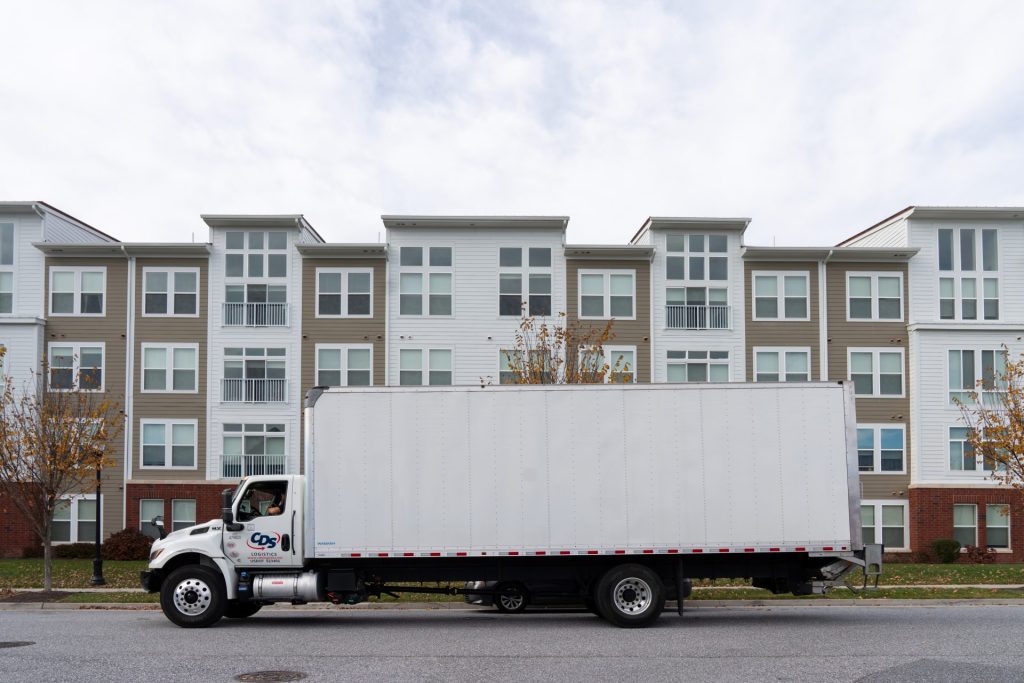
Big and bulky items like furniture, appliances, cabinets, and fitness equipment demand a fundamentally different delivery operation that standard parcel carriers aren’t built to handle. Here’s what separates specialized big and bulky partners from the rest.
What Is Last Mile Delivery and Why Does It Matter for Big and Bulky Goods?
Last mile delivery refers to the final leg of the supply chain, which is the movement of a product from a distribution hub or fulfillment center to the customer’s doorstep. For standard e-commerce, this typically means a van, a driver, and a cardboard box. For big and bulky goods—which encompasses sofas, refrigerators, treadmills, mattresses, cabinet systems—the dynamics change entirely.
These oversized, heavyweight items require specialized vehicles, trained two-person delivery crews, threshold or white-glove service options, and precise scheduling coordination. A standard parcel carrier dropping a box at the front door is simply not equipped for a 300lb sectional sofa that potentially needs to be navigated up three flights of stairs and assembled in a living room.
For retailers and manufacturers selling large goods, the choice of last mile partner isn’t a logistics detail. It’s a core business decision that directly impacts customer satisfaction, return rates, and brand perception.
The Unique Challenges of Big and Bulky Last Mile Logistics
Big and bulky delivery is one of the most operationally complex sectors in the logistics industry. Standard delivery models break down across multiple dimensions:
| Vehicle Requirements | Oversized freight requires box trucks, liftgates, and specialized load-securing equipment—not standard vans. |
| Two-Person Crews | Heavy items demand team lifts for safety and liability. Solo delivery is not viable for most big and bulky categories. |
| Customer Scheduling | Customers must be home. Appointment-based windows require dynamic scheduling and real-time communication. |
| Damage Risk | Large items are far more susceptible to transit damage. Improper handling increases claims, returns, and replacement costs. |
| Room-of-Choice & Assembly | Customers may expect placement in a specific room, packaging removal, and even basic assembly, which require skilled crews. |
| Reverse Logistics | Returns and haul-away of old appliances or furniture are common expectations, requiring coordinated reverse logistics. This may often be presented as an additional charge by a carrier. |
Each of these challenges grows when operating at scale across different regions, building types, and customer expectations. A general-purpose carrier bolting on ‘big and bulky’ service is rarely equipped to reliably handle complex deliveries consistently.
Why Retailers Need Specialized Big and Bulky Delivery Partners
Retailers selling furniture, home appliances, fitness equipment, or outdoor goods face a particular challenge: their customers associate the delivery experience with the brand, not the carrier. A poor delivery doesn’t just result in a bad review. It can potentially mean lost sales and revenue in the future and a poor reflection of the brand overall.
Customer Experience Is the Product
In the era of e-commerce, the physical delivery of a large item is often the only in-person brand touchpoint a customer has. Specialized big and bulky carriers invest in training their crews not just in safe lifting techniques, but in customer interaction, appearance, and communication. They carry branded uniforms, use delivery apps with real-time tracking, and follow structured service protocols that reflect the retailer’s brand values.
A poorly trained crew arriving in an unmarked truck, unable to communicate estimated arrival times, reflects directly on the retailer who sold the couch or the refrigerator.
Fewer Damages, Fewer Returns
Specialized carriers build their entire operation around protecting large, fragile, or high-value items in transit. This means purpose-built vehicles with padded interiors, proper load bars and strapping equipment, blanket wrapping protocols, and structured training on item-specific handling requirements.
The result is fewer damaged goods, fewer return claims, and lower total cost of delivery when downstream costs are factored in. A single damaged sofa requiring replacement can cost more than a dozen deliveries. Specialized partners dramatically reduce this tail risk.
Scheduling and Communication Infrastructure
Appointment-based delivery for large items requires sophisticated scheduling infrastructure: customer-facing booking portals or confirmation flows, automated SMS and email notifications, real-time driver tracking, and escalation paths when delivery windows need to shift.
Specialized big and bulky providers build these systems as core product, not as afterthoughts layered on top of a freight management system. At CDS Logistics, this is the CDS Vision Suite™, our in-house and proprietary technology. Read more about it here.
Key Capabilities to Look for from a specialized Partner
- Two-person delivery teams as standard—not as an upsell
- Threshold, room-of-choice, and white-glove service tiers
- Real-time tracking and proactive customer communication
- Defined damage protocols and rapid claims resolution
- Flexible scheduling windows with appointment confirmation
- Carrier-managed exception handling and re-delivery processes
Why Manufacturers Also Need Specialized Last Mile Partners
Manufacturers who sell direct-to-consumer, or who support their retail partners’ fulfillment, have an equally compelling case for investing in specialized last mile logistics. As DTC e-commerce has grown, the expectation that manufacturers will own or influence the end customer experience has become unavoidable.
Brand Equity at the Doorstep
When a manufacturer ships a premium appliance or a bespoke piece of furniture directly to a consumer, the delivery crew represents their brand in a moment of maximum customer excitement. A manufacturer who has invested years in product quality and marketing can see that equity eroded in fifteen minutes by a poor delivery experience. Specialized partners understand this, and their operational model is built accordingly.
Channel Conflict Management
Manufacturers selling both through retail partners and directly face the challenge of delivering consistent service quality across channels. Specialized big and bulky partners who serve both manufacturers and their retail partners can help ensure a consistent delivery experience regardless of the purchase channel, ultimately protecting pricing integrity and brand consistency.
Warranty and Service Integration
Many manufacturers offer warranty or installation services alongside their products. A specialized big and bulky carrier with the right systems can integrate delivery with service scheduling—coordinating installation appointments at the point of delivery confirmation or flagging units for inspection before placement. This kind of operational integration is simply not possible with a standard freight carrier.
How to Evaluate a Big and Bulky Last Mile Delivery Partner
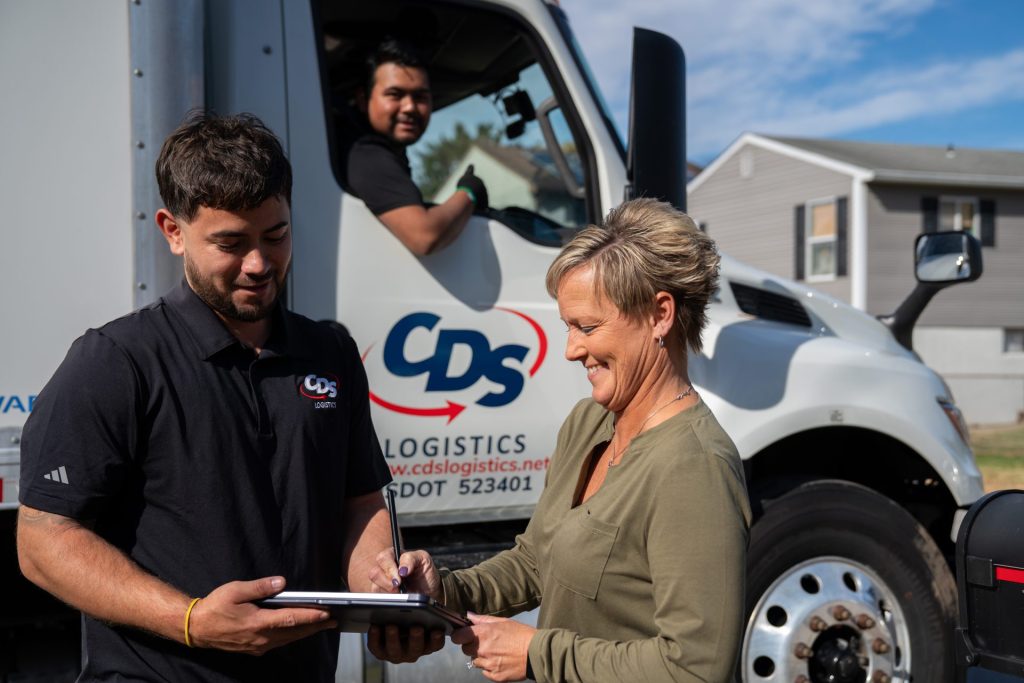
Not all carriers who claim to handle big and bulky goods are truly specialized. When evaluating potential partners, retailers and manufacturers should look beyond pricing to assess operational depth, geographic coverage, technology capabilities, and cultural alignment.
Geographic Coverage and Network Density
A specialized carrier who covers only major metro areas may not serve your customer base. Evaluate whether a potential partner’s delivery footprint matches your sales geography and whether their network is dense enough to provide reasonable delivery windows without excessive transit time from hub to customer.
Service Level Portfolio
Your customers aren’t monolithic. A value-oriented buyer purchasing a mid-range appliance may be perfectly satisfied with threshold delivery; a premium furniture customer may expect white-glove service including assembly and packaging removal. A strong big and bulky partner offers multiple tiers and enables you to match service level to product category and customer segment.
Claims Performance and Damage Rates
Ask prospective partners for documented damage rates, claims resolution timelines, and exception percentages. A carrier unable or unwilling to share this data is a carrier you should be skeptical of. The best specialized carriers track these metrics and use them to drive continuous operational improvement.
Technology and Visibility
Can you access real-time delivery status for every shipment in your network? Can your customers track their driver on a map in the hours before delivery? Can your operations team get automated alerts when an exception occurs? These are must-haves for a serious big and bulky partner in 2026.
Trends Shaping Big and Bulky Last Mile Delivery
The last mile logistics industry is evolving rapidly, and the big and bulky segment is no exception. Several trends are reshaping the category in ways that make the choice of specialized partners even more consequential.
Rising Consumer Expectations
Consumers who receive same-day parcel delivery are beginning to expect faster scheduling and narrower delivery windows for large items too. The definition of ‘acceptable’ delivery lead time has narrowed significantly since 2020 and the COVID-19 pandemic, and specialized carriers are investing in regional hub networks and dynamic routing to meet these expectations without sacrificing margin.
Sustainability Requirements
Many large retailers and manufacturers now have emissions reduction commitments that extend to their delivery partners. Specialized big and bulky carriers are increasingly expected to report on fleet emissions, route efficiency, and sustainability certifications. Partners who have invested in route optimization software and are transitioning toward lower-emission fleets will be differentiators in the years ahead.
Reverse Logistics at Scale
As furniture and appliance e-commerce has grown, so have return rates. The ability to coordinate pickup, inspection, refurbishment, and reintegration into inventory is becoming a meaningful competitive advantage. Specialized carriers who can manage the full lifecycle—outbound delivery and inbound return—provide significantly more value than those focused on one direction only.
Data-Driven Operations
The leading specialized big and bulky carriers are increasingly deploying machine learning for route optimization, predictive staffing, and damage risk flagging. These capabilities reduce costs, improve reliability, and create a virtuous cycle of operational performance that compounds over time. When evaluating partners, ask about how they use data—not just to report on the past, but to improve the future.
For retailers and manufacturers selling large goods, the last mile is the last chance to deliver on the promise of the product and the brand. A specialized big and bulky delivery partner is not just a logistics vendor; they’re someone who actively works within and aids business strategy.
Frequently Asked Questions
What is last mile delivery for big and bulky goods?
Last mile delivery is the final leg of the supply chain—moving a product from a distribution hub to the customer’s doorstep. For big and bulky goods like sofas, refrigerators, treadmills, mattresses, and cabinet systems, this requires specialized vehicles, trained two-person crews, threshold or white-glove service options, and precise scheduling coordination, rather than the single van, driver, and box that standard e-commerce uses.
Why can’t standard parcel carriers handle big and bulky deliveries?
Standard delivery models break down across multiple dimensions for oversized freight. These items need box trucks, liftgates, and load-securing equipment instead of vans; two-person crews for safe lifting; appointment-based scheduling; specialized damage protection; room-of-choice placement and assembly; and reverse logistics for returns and haul-away. A general carrier bolting on “big and bulky” service is rarely equipped to handle this consistently at scale.
How does a specialized big and bulky carrier reduce damage and returns?
Specialized carriers build their operation around protecting large, fragile, or high-value items with purpose-built vehicles featuring padded interiors, proper load bars and strapping, blanket-wrapping protocols, and item-specific handling training. This produces fewer damaged goods, fewer return claims, and lower total delivery cost—since a single damaged sofa requiring replacement can cost more than a dozen deliveries.
Why do manufacturers need specialized last mile partners?
Manufacturers selling direct-to-consumer have the delivery crew representing their brand at the moment of maximum customer excitement, and years of product and marketing investment can be eroded by a poor delivery. Specialized partners also manage channel conflict by ensuring consistent service across retail and direct channels, and can integrate delivery with warranty or installation scheduling—something standard freight carriers can’t do.
What should you look for when evaluating a big and bulky delivery partner?
Assess whether the partner’s geographic coverage and network density match your sales footprint, whether they offer multiple service tiers (threshold, room-of-choice, white-glove), and whether they share documented damage rates, claims resolution timelines, and exception percentages. Strong technology and visibility are must-haves: real-time delivery status, customer-facing driver tracking, and automated exception alerts.
What key capabilities define a truly specialized big and bulky partner?
Look for two-person delivery teams as standard rather than an upsell, multiple service tiers including white-glove, real-time tracking and proactive communication, defined damage protocols with rapid claims resolution, flexible scheduling with appointment confirmation, and carrier-managed exception handling and re-delivery processes.
What trends are reshaping big and bulky last mile delivery?
Four trends are making partner choice more consequential: rising consumer expectations for faster scheduling and narrower windows, sustainability requirements that extend emissions commitments to delivery partners, reverse logistics at scale as return rates climb, and data-driven operations using machine learning for route optimization, predictive staffing, and damage-risk flagging.
About CDS Logistics: Experts in Big and Bulky Last Mile Delivery
CDS Logistics is one of the largest providers of last mile delivery and fulfillment solutions in the United States. CDS’s headquarters is in Baltimore, Maryland, with 182 hubs nationwide. Over the past three decades, CDS has built expertise to make the company an industry leader specializing in big and bulky products. CDS’s proprietary, in-house technology and hands-on operational expertise provide results that are consistent, reliable, and proven to drive outstanding customer experiences.
Click the buttons below to learn more about the industries we serve, as well as the services we provide.
Other Resources
- How White-Glove Delivery Reduces Damage Claims on Heavy Fitness Equipment
- How Route Optimization Software Actually Cuts Delivery Costs
- In-Home Delivery vs. Threshold Delivery vs. Curbside: What’s the Difference?
- Jobsite Coordination: Why Builder Schedules Should Drive Your Delivery Windows
- How Window and Door Manufacturers Can Cut Damage Claims in Half

