A hybrid delivery model is a last-mile strategy where a retailer uses its own delivery fleet for some orders and outsources others to third-party carriers. Furniture retailers run in-house trucks in dense markets and for premium white-glove service, while outsourcing low-density areas, demand spikes, and basic deliveries to cut costs and scale flexibly.
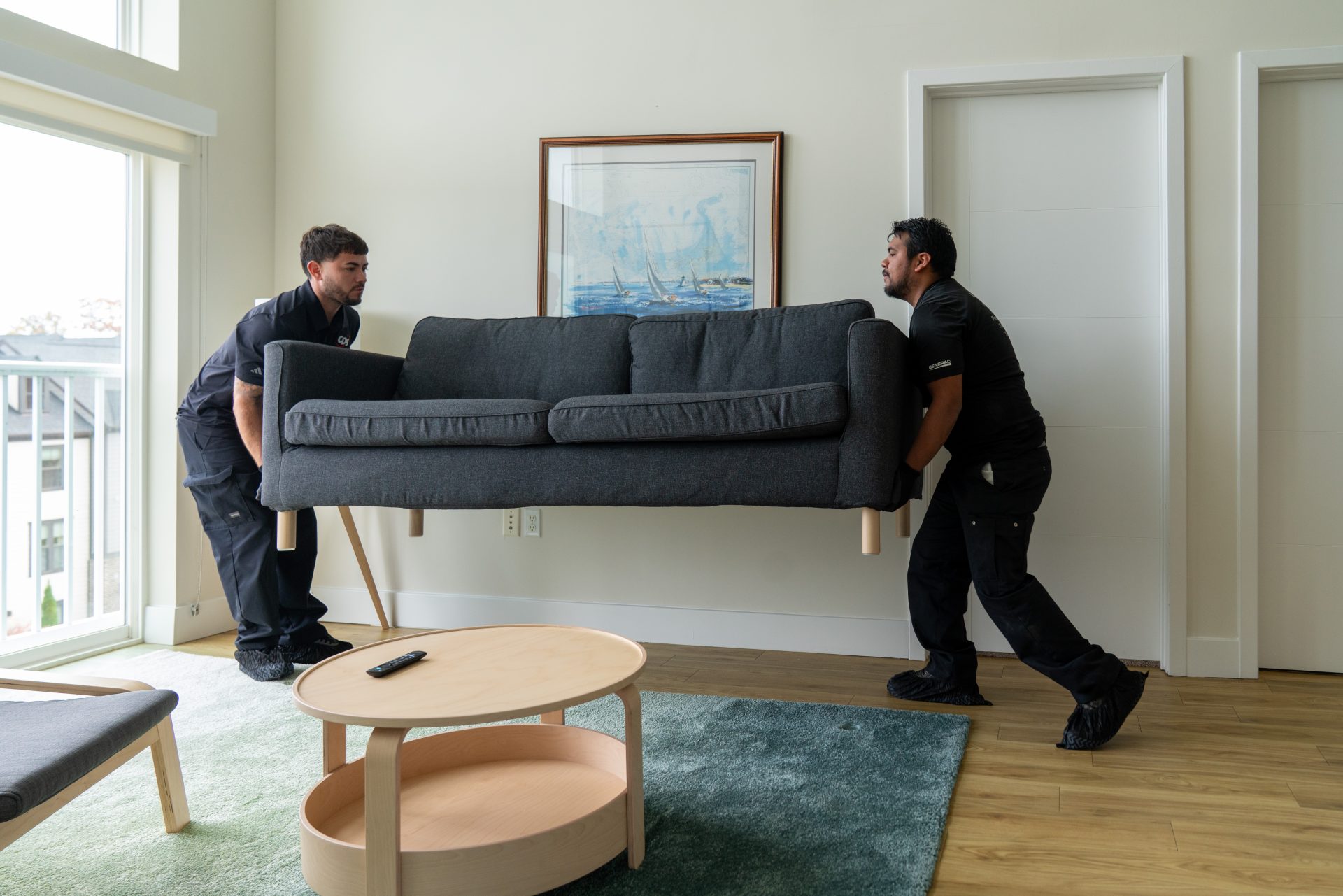
A hybrid delivery model is a last mile strategy in which a retailer operates its own delivery fleet for part of its volume and contracts with third-party carriers or delivery service providers for the rest. For furniture retailers, this typically means running in-house trucks in dense, high-volume markets where brand experience matters most, while outsourcing deliveries in outlying regions, during demand spikes, or for specific service tiers like threshold delivery.
The model has become the default for mid-size and large furniture retailers because furniture is uniquely hard to deliver: items are bulky, often require two-person teams, frequently need assembly or installation, and carry high return costs when something goes wrong. Owning every truck is expensive and inflexible, and outsourcing everything means surrendering the single most memorable moment of the customer journey to a third party. A hybrid model splits the difference.
This guide explains how the hybrid model works, when it makes sense, how to decide which deliveries to keep in-house, and what it takes to manage both networks without doubling your operational overhead.
How Does a Hybrid Delivery Model Work?
In a hybrid model, every order is routed to one of two networks based on rules the retailer defines: an in-house fleet or an outsourced network (third-party logistics providers, regional white-glove carriers, or contracted delivery service providers).
The routing decision usually happens automatically inside the retailer’s order management or transportation management system (TMS). Common routing rules include:
- Geography. In-house teams cover a defined radius around stores or distribution centers; everything beyond that goes to a partner carrier.
- Service level. White glove and room-of-choice deliveries stay in-house, where the retailer controls training and presentation; threshold and curbside deliveries are outsourced.
- Capacity. In-house routes are filled first each day; overflow automatically tenders to third parties.
- Product type. High-value or assembly-intensive items (sectionals, beds, etc.) ride on company trucks; smaller parcels and accent pieces ship via carriers.
The customer ideally never knows which network delivered their sofa. Branding, communication, scheduling, and proof-of-delivery standards are held consistent across both.
Read our white paper on how last mile delivery actually costs retailers here.
Why Do Furniture Retailers Use Hybrid Delivery?
1. Furniture demand is seasonal and lumpy
Furniture sales spike around holidays, tax-refund season, and promotional events, then slow down. Sizing an in-house fleet for peak volume means trucks and crews sit idle the rest of the year; sizing it for average volume means failed delivery promises at peak. A hybrid model lets retailers run a lean in-house fleet at high utilization and flex outsourced capacity up or down as demand moves.
2. The last mile is the brand
For most furniture purchases, the delivery team spends more face time with the customer than any store associate did. They enter the home, assemble the product, and leave the final impression. Retailers keep their highest-stakes deliveries in-house to control hiring, training, uniforms, and damage handling, while outsourcing deliveries where the experience bar is lower.
3. Geographic expansion without capital expansion
Opening a new market with an owned fleet requires trucks, drivers, a cross-dock, and management. Partnering with a regional white-glove carrier lets a retailer test a market immediately, then transition to in-house operations only if volume justifies it.
4. Cost control
In-house delivery carries fixed costs (vehicles, insurance, payroll, facilities) that are efficient only at high route density. Outsourced delivery converts those fixed costs to variable per-stop costs. The hybrid model lets retailers put each delivery on whichever cost structure is cheaper for that stop: dense urban routes in-house, sparse rural stops outsourced.
In-House vs. Outsourced Last Mile: What’s the Difference?
| Factor | In-House Fleet | Outsourced Carrier |
| Cost structure | Fixed (trucks, payroll, insurance) | Variable (per stop or per cube) |
| Best at | High route density, premium service | Low density, overflow, new markets |
| Control over experience | Full | Contractual / SLA-based |
| Scalability | Slow (hire, buy, train) | Fast (tender more volume) |
| Damage & claims handling | Direct, immediate | Mediated through the carrier |
| Capital requirement | High | Low |
| Visibility | Native (your telematics, your app) | Depends on carrier integration |
Neither option wins outright — which is precisely why hybrids exist. The strategic question isn’t “in-house or outsourced?” It’s “which deliveries belong on which network?”
How to Decide Which Deliveries Stay In-House
Most furniture retailers segment their delivery volume along four dimensions:
Route density. Calculate stops per route per day by zip code. Markets where in-house trucks can complete 8–12 white-glove stops daily usually beat third-party per-stop pricing. Markets where a truck would make 3–4 stops with long drive times between them are almost always cheaper to outsource.
Service complexity. Deliveries involving stairs, assembly, installation, haul-away of old furniture, or deluxing (final inspection and touch-up) benefit from trained, dedicated in-house crews. Simple threshold drops do not.
Order value and margin. A $4,000 sectional justifies the cost of a controlled, branded delivery. A $150 accent table does not and may not even need a two-person team.
Customer segment. Some retailers keep deliveries to top-tier or repeat customers in-house regardless of geography, treating the delivery itself as a retention investment.
What Are the Challenges of a Hybrid Delivery Model?
The most common failure points for a hybrid delivery model are:
Inconsistent customer experience. If your in-house teams call ahead, wear booties, and assemble in the room of choice — but your outsourced carrier drops boxes in the driveway — customers don’t blame the carrier. They blame you. Solving this requires detailed carrier SLAs, scorecards, and mystery-shopping both networks.
Fragmented visibility. In-house GPS tracking plus three carrier portals equals a customer service team toggling between five screens. A unified TMS or last-mile platform that ingests tracking from every network is close to mandatory at scale.
Split accountability for damage. Furniture damage claims are frequent and expensive. Define photo-based proof-of-delivery standards, claim windows, and chargeback terms in carrier contracts before the first delivery, not after the first dispute.
Tender leakage and cost creep. Without clear routing rules, dispatchers default to whatever’s easiest — often outsourcing stops that in-house trucks could absorb. Audit the in-house/outsourced split monthly against the original cost model.
Carrier dependency at peak. Everyone needs flex capacity in November. Lock in peak commitments with partners by late summer or expect surge pricing and missed windows.
How Do You Measure Success in a Hybrid Model?
Track the same KPIs across both networks so you can compare them honestly:
- Cost per delivery (fully loaded for in-house, including overhead allocation)
- First-attempt completion rate
- On-time arrival within the promised window
- Damage and claims rate per 100 deliveries
- Customer satisfaction / delivery NPS, surveyed per delivery, tagged by network
- Route density (stops per route per day) for in-house lanes
When an outsourced lane consistently beats in-house on cost without losing ground on satisfaction or damage, shift more volume to it — and vice versa. The hybrid model only delivers its promised savings if the split is actively managed, not set once and forgotten.
Frequently Asked Questions
What is a hybrid delivery model in retail?
A hybrid delivery model is a fulfillment strategy where a retailer uses its own delivery fleet for some orders and third-party carriers for others, routing each order based on geography, service level, capacity, or cost. It combines the control of in-house delivery with the flexibility of outsourcing.
Is a hybrid delivery model cheaper than fully outsourcing?
It depends on route density. In dense markets where in-house trucks complete many stops per day, owned fleets typically cost less per delivery than third-party rates. In sparse markets, outsourcing is cheaper. A hybrid model is usually the lowest-cost option overall because it assigns each delivery to whichever network is more economical for that stop.
What is white glove delivery in furniture?
White glove delivery is a premium service level where a trained two-person team brings furniture into the customer’s room of choice, unpacks it, assembles or installs it, removes packaging, and often hauls away old furniture. It is the most common service tier furniture retailers keep in-house under a hybrid model.
How do retailers keep delivery quality consistent across in-house and outsourced teams?
Through carrier SLAs that mirror in-house standards (arrival windows, photo proof of delivery, in-home conduct rules), shared training materials, unified customer communications sent from the retailer’s own systems, and regular scorecard reviews comparing both networks on the same KPIs.
When should a furniture retailer move from outsourced to in-house delivery?
The usual trigger is sustained route density: when a market generates enough daily volume that an owned truck would run 8 or more stops per day, in-house economics typically beat third-party per-stop pricing, and the retailer gains direct control of the customer experience as a bonus.
About CDS Logistics: Experts in Big and Bulky Last Mile Delivery
CDS Logistics is one of the largest providers of last mile delivery and fulfillment solutions in the United States. CDS’s headquarters is in Baltimore, Maryland, with 182 hubs nationwide. Over the past three decades, CDS has built expertise to make the company an industry leader specializing in big and bulky products. CDS’s proprietary, in-house technology and hands-on operational expertise provide results that are consistent, reliable, and proven to drive outstanding customer experiences.
Click the buttons below to learn more about the industries we serve, as well as the services we provide.
- How White-Glove Delivery Reduces Damage Claims on Heavy Fitness Equipment
- How Route Optimization Software Actually Cuts Delivery Costs
- In-Home Delivery vs. Threshold Delivery vs. Curbside: What’s the Difference?
- Jobsite Coordination: Why Builder Schedules Should Drive Your Delivery Windows
- How Window and Door Manufacturers Can Cut Damage Claims in Half

