Last mile delivery is the shortest leg of the shipping journey but the most expensive and failure-prone, accounting for roughly 53% of total shipping costs. The companies solving this aren’t hiring more drivers or running more vehicles; they’re using a layered technology stack that reduces friction at every stage, from route planning to the moment a package arrives. Failed deliveries are rarely a single mistake: they’re the product of compounding issues (vague delivery windows, mismatched addresses, no way for drivers to communicate) that technology can now make visible and prevent before they happen.
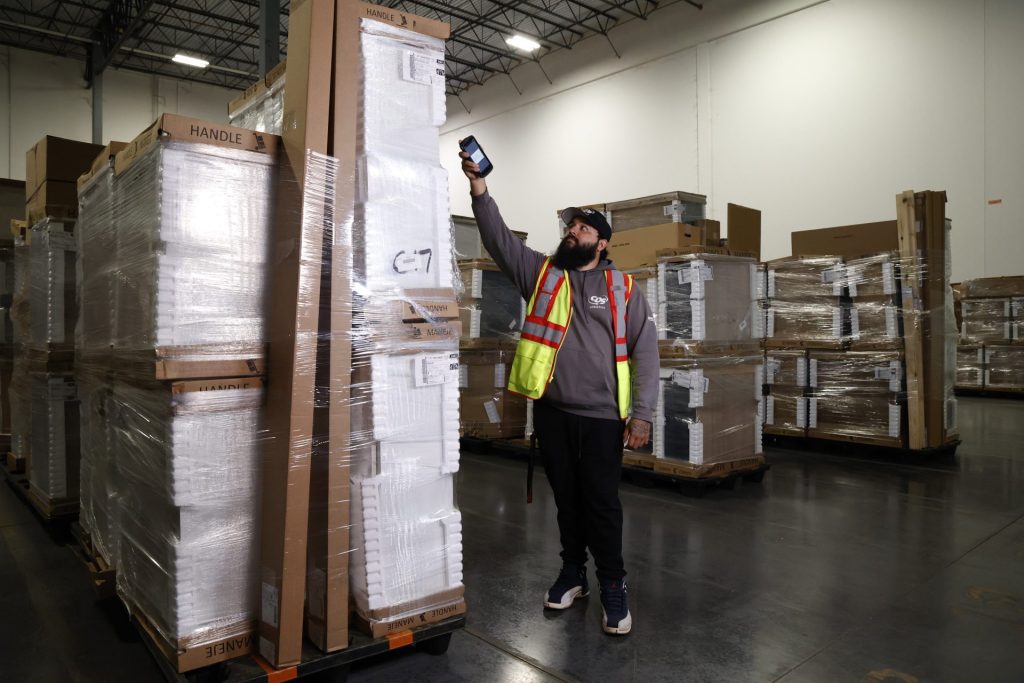
Last mile delivery is where logistics promises meet physical reality, and that gap is getting increasingly harder to close. Despite being the shortest leg of the journey, the last mile is consistently the most expensive and most failure prone.
Packages get delayed, recipients aren’t home, addresses are wrong, and drivers are left making judgment calls with no support. Every one of those moments is a cost, whether indirect or direct.
The good news is that the companies solving these problems aren’t doing it by hiring more drivers or running more vehicles. They’re doing it with smarter technology — tools that reduce friction at every stage of the delivery process, from route planning to the moment a package lands at a customer’s door.
This blog post breaks down the key technologies making the biggest difference right now.
Why Failed Deliveries Happen
Failed deliveries are rarely the result of a single mistake. They tend to be the end product of several compounding issues that build up over the course of a route: a customer who wasn’t given a precise enough delivery window, an address that doesn’t match what the mapping software expects, a driver who couldn’t reach anyone and had no way to communicate at the delivery moment.
At the same time, the pressure from customers continues to increase. People often expect deliveries to fit in with their lives, rather than rearranging their schedules completely so their cabinets arrive. When that expectation isn’t met, the damage goes well beyond the immediate redelivery cost. It chips away at loyalty and makes the next purchase decision a little less automatic.
The challenge for operators is that many of these failure points have historically been invisible until after they happen. That’s exactly what technology is changing.
The Technology Stack Making the Difference
Reducing delivery failures isn’t about finding one silver-bullet tool. The operators getting it right are using a layered approach: connected technologies that work together across planning, communication, visibility, and data. Here’s what that looks like in practice.
AI-Powered Route Optimization
Route optimization has been around for a while, but what AI brings to it is fundamentally different from older planning tools. Rather than generating a fixed route at the start of the day, modern AI routing systems adapt continuously. They’re constantly adjusting to traffic, failed stops, and changing delivery windows as the shift unfolds.
The practical effect is that drivers spend less time on the road and more time completing stops. Routes that previously relied on old systems are replaced with dynamically optimized sequences that account for dozens of variables at once. The result: fewer wasted miles, lower fuel spend, and crucially, tighter delivery windows that make it more likely customers will be home.
Proactive Customer Notifications
One of the most effective ways to avoid failed deliveries is also one of the most straightforward methods: keeping customers informed in real time. When someone knows their driver is an hour away, they can make sure they’re available. When they don’t hear anything until a note was left on the door, the failure was almost inevitable.
SMS notifications in particular cut through in a way that email rarely does. Near-universal open rates mean the message almost always reaches the customer. And the downstream effect on support volumes is significant—fewer missed deliveries translate directly to fewer inbound calls, fewer complaints, and fewer redelivery attempts.
The best notification systems in 2026 go beyond a simple “your order is on the way” message. They include:
- Live tracking links that update as the driver moves
- Dynamic arrival windows that narrow as the stop approaches
- Easy one-tap rescheduling if the customer can’t be home
- Two-way messaging so drivers can resolve access issues without a failed attempt
Predictive Failure Detection
The most forward-thinking operators have shifted from reacting to failed deliveries to preventing them before a driver ever leaves the depot.
Predictive failure detection works by analyzing patterns across historical delivery data and flagging deliveries that show a high risk of failure. When a stop is flagged, the system can automatically trigger outreach to the customer before dispatch: a confirmation request, an availability check, or an offer to redirect to a nearby collection point.
This shifts the economics fundamentally. Instead of absorbing the full cost of a failed attempt after the fact, operators can either prevent the failure entirely or redirect at near-zero cost before the vehicle has moved.
Digital Proof of Delivery (POD)
Failed deliveries are expensive. Disputed deliveries can be even more so, with customer service tied up with calls, time spent on ordering replacements, and lasting trust issues that are hard to quantify created whenever anything goes wrong.
Digital proof of delivery replaces paper records and verbal confirmations with timestamped and GPS-verified documentation captured at the moment of handoff. Drivers use a mobile app to photograph the delivery, capture a signature where needed, and add any relevant notes. That record is instantly searchable and linked to the specific order: no end-of-day paperwork, no missing documentation.
The operational benefits compound quickly:
- Photographic evidence resolves most delivery disputes before they escalate
- Customer trust increases, especially for high-value or sensitive shipments
- Managers gain real-time visibility into delivery completion rather than waiting for end-of-day reports
- The audit trail provides clear accountability across the entire fleet
Unified Data Platforms and Fleet Visibility
One of the least visible but most significant drags on last-mile performance is fragmentation. Many operators still run separate tools for routing, telematics, order management, and customer communication. These systems often don’t talk to each other, creating blind spots that prevent real-time decision-making.
The shift to unified data platforms changes what’s possible. When routing, fleet status, order data, and customer information all flow through a single system, operators can respond to problems as they develop rather than discovering them after the fact. A vehicle running late on one route can trigger automatic rescheduling on another. A surge in volume can be absorbed by bringing in additional capacity before delays compound.
For operators running AI-powered tools, unified data is also a prerequisite. Even the most advanced algorithms can’t perform without clean, connected data flowing across the stack. Fragmented systems don’t just limit efficiency: they effectively disable the AI investment entirely.
The Bottom Line
Last mile delivery has quietly become one of the most important brand touchpoints a business controls. Every successful delivery reinforces trust. Every failure—a missed window, no-show driver, lost parcel—chips away at it.
The operators getting this right aren’t necessarily the largest ones. They’re the ones who’ve replaced guesswork with visibility, static planning with dynamic routing, and reactive customer service with proactive communication. The technology to do all of this exists and is increasingly accessible, regardless of fleet size.
Frequently Asked Questions
How much of total shipping costs does last mile delivery represent?
Last mile delivery accounts for roughly 53% of total shipping costs. Despite being the shortest leg of the shipping journey, it is consistently the most expensive and most failure-prone, which is why technology that reduces failures has such a significant impact on overall logistics costs.
Why do deliveries fail?
Failed deliveries are rarely caused by a single mistake. They result from compounding issues across a route—an imprecise delivery window, an address that doesn’t match mapping software, or a driver who can’t reach the customer and has no way to communicate. Historically these failure points were invisible until after they happened, which is what technology is now changing.
What technologies reduce failed deliveries?
The most effective approach is a layered technology stack rather than a single tool: AI-powered route optimization, proactive customer notifications, predictive failure detection, digital proof of delivery, and unified data platforms. These connected systems work together across planning, communication, visibility, and data to reduce friction at every stage.
How does AI route optimization differ from older routing tools?
Older tools generate a fixed route at the start of the day. AI routing adapts continuously, adjusting to traffic, failed stops, and changing delivery windows as the shift unfolds. The result is fewer wasted miles, lower fuel spend, and tighter delivery windows that make it more likely customers will be home.
What is predictive failure detection?
Predictive failure detection analyzes patterns across historical delivery data to flag deliveries at high risk of failing. When a stop is flagged, the system can automatically trigger customer outreach before dispatch—a confirmation request, availability check, or offer to redirect to a nearby collection point—preventing the failure or redirecting at near-zero cost before the vehicle moves.
Why are unified data platforms important for last mile delivery?
Many operators run separate tools for routing, telematics, order management, and customer communication that don’t talk to each other, creating blind spots. Unified platforms let operators respond to problems as they develop rather than after the fact. They’re also a prerequisite for AI tools, since advanced algorithms can’t perform without clean, connected data.
Why are SMS notifications more effective than email for deliveries?
SMS notifications have near-universal open rates, so the message almost always reaches the customer. When someone knows their driver is an hour away, they can make sure they’re available, directly reducing missed deliveries, inbound support calls, complaints, and redelivery attempts.
About CDS Logistics: Experts in Big and Bulky Last Mile Delivery
CDS Logistics is one of the largest providers of last mile delivery and fulfillment solutions in the United States. CDS’s headquarters is in Baltimore, Maryland, with 182 hubs nationwide. Over the past three decades, CDS has built expertise to make the company an industry leader specializing in big and bulky products. CDS’s proprietary, in-house technology and hands-on operational expertise provide results that are consistent, reliable, and proven to drive outstanding customer experiences.
Click the buttons below to learn more about the industries we serve, as well as the services we provide.
Other Resources
- How White-Glove Delivery Reduces Damage Claims on Heavy Fitness Equipment
- How Route Optimization Software Actually Cuts Delivery Costs
- In-Home Delivery vs. Threshold Delivery vs. Curbside: What’s the Difference?
- Jobsite Coordination: Why Builder Schedules Should Drive Your Delivery Windows
- How Window and Door Manufacturers Can Cut Damage Claims in Half

